Nursa
- 4.2
- Rating
- 100.00K
- Installs
- Free
- Price

 Analysis by App-foxy
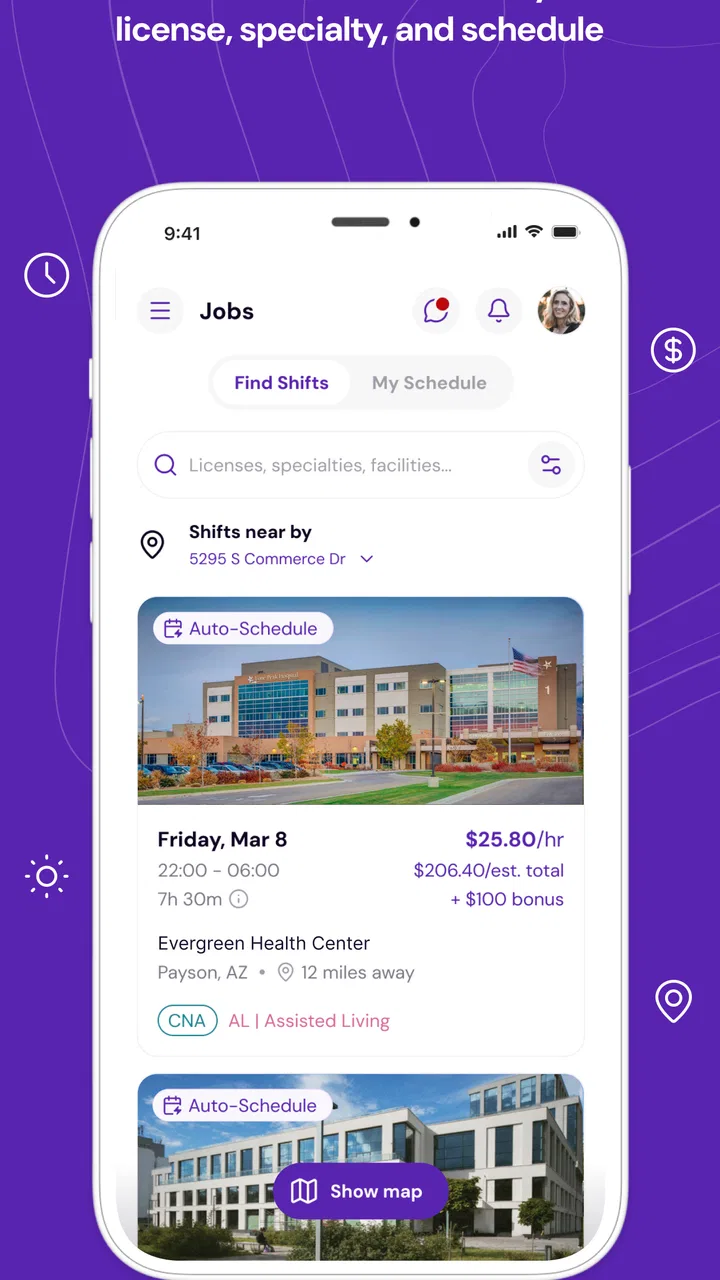
Finding nursing work is rarely as simple as checking a calendar and choosing an open shift. Location, specialty, timing, credentials, and the practical details of each assignment all matter, especially when a last-minute change leaves you looking for work quickly. Nursa is designed around that specific problem: it connects nurses with available shifts through a healthcare staffing marketplace rather than functioning like a general job board.
I approached it as a working tool, not as a medical reference app or a replacement for an employer’s scheduling system. That distinction is important. Its value comes from helping qualified healthcare professionals discover and pursue shift opportunities, while the quality of the experience depends heavily on what is available in the user’s area and whether the listed work fits their credentials and schedule.
Nursa is free to download, developed by Nursa INC, and listed in the Medical category for everyone. It has built a noticeable audience, with more than one hundred thousand installs and an average rating of 4.2 from roughly two thousand ratings. Those figures suggest a service that many people find useful, but they do not remove the need to inspect each opportunity carefully before committing.
You May Also Like

 Blood Strike: 2.5 Anniversary
Blood Strike’s Loadouts Turn Every Drop Into a Tactical Gamble
A close look at Blood Strike’s custom loadouts: how fast access to signature weapons reshapes its battle royale rhythm, rewards preparation, and narrows the gap between fights.

 Pandora - Music & Podcasts
Pandora’s Music Is Easy to Start, but Harder to Recover
Pandora’s strength is its low-effort path from a seed to a station. Its weak spot is how much confidence it asks you to place in connection, setup, and quiet recovery.

 8 Ball Pool
 Is Built on Rivalries, Rematches, and Routine
A close look at the rivalries, rematches, shared routines, and unanswered safety questions that turn a quick pool match into a persistent mobile community.

 Samsung Music
’s Quiet Strength Is Playing What You Already Own
Its reach comes less from spectacle than from dependable access to a personal library. That simplicity is both the app’s strongest retention engine and its ceiling.

 AccuWeather: Weather Radar
AccuWeather Review: A Quick, Clear Forecast for Everyday Decisions
For everyday plans, the best forecast is the one you can understand quickly. AccuWeather makes rain timing, radar, and local conditions easy to act on, with a few trade-offs.

 Hill Climb Racing
Why Hill Climb Racing Still Turns Crashes Into One More Run
A tiny car, a bumpy hill and one more upgrade: Hill Climb Racing keeps resurfacing because its simple chaos makes every near-miss feel personal.
More From Our News Desk



How the current Nursa experience fits real nursing work
The central idea is straightforward: use the app to find open nursing shifts and fill them through the marketplace. Instead of browsing broad employment advertisements, I found the concept more useful when thinking in terms of individual work opportunities. A nurse who wants occasional flexibility can approach the app differently from someone searching for a stable, repeating schedule.
That makes Nursa particularly relevant to professionals who already understand their availability and credentials. If I know that I can work a particular evening, have the required experience, and am willing to travel to a certain facility, a shift marketplace gives me a more focused starting point than a conventional job-search site. I am not sorting through permanent positions that may take weeks to process; I am looking for work that matches a nearer-term need.
The app is also better suited to active users than passive ones. It is not something I would install and forget while expecting it to solve staffing decisions automatically. The useful habit is to check available work, review the details, compare it with my real schedule, and act only when the assignment makes sense. That sounds obvious, but shift-based work can make a seemingly convenient opening impractical once travel, recovery time, childcare, or another commitment is considered.
A realistic example would be a nurse whose regular schedule has left an unexpected free day. Rather than contacting several facilities individually, the nurse can use Nursa to look for a suitable shift, narrow the search by practical constraints, and decide whether the opportunity is worth pursuing. The advantage is not simply speed; it is the ability to see potential work in one place and make a more informed choice than relying on scattered messages or word of mouth.
Who will get the most from it
I see the strongest fit for nurses who want control over when they work, professionals building a flexible schedule, and people who are comfortable evaluating assignments independently. It can also make sense for someone who has recently changed availability and wants to explore options without immediately committing to a traditional full-time role.
The app may be especially useful when the problem is not finding any employment, but finding a shift that fits around an existing life. A parent with a narrow window, a nurse supplementing regular work, or a professional interested in occasional assignments may value a marketplace approach more than a standard recruitment portal. The ability to consider individual shifts changes the decision from “Which employer should I apply to?” to “Does this particular opportunity work for me?”
On the other hand, I would not make it the first choice for somebody seeking a guaranteed permanent position, a clearly defined long-term career path, or a single employer’s complete internal schedule. A staffing marketplace and an employer’s own scheduling system serve different purposes. If stability, benefits, orientation, and long-term progression are the main priorities, direct applications or an established staffing relationship may be more appropriate.
What I would check before accepting a shift
The most important practical lesson is to treat every listing as a decision that needs verification, not as an automatic match. I would check the facility location, start and end times, role expectations, required credentials, and any detail that could affect whether I can safely and professionally perform the work. A shift that looks attractive at first can become a poor choice if the commute is too long or the clinical setting does not match my experience.
I would also compare the opportunity with the rest of my week rather than looking at it in isolation. An extra shift may appear to solve a short-term income need but create fatigue before a regular assignment. In healthcare, that trade-off is more serious than it would be in many other types of casual work. The app can help surface options, but it cannot make the professional judgment about whether accepting one is responsible.
A useful workflow is to decide personal boundaries before opening the marketplace. I would set a maximum travel distance, identify the types of facilities I am prepared to work in, and mark unavailable periods in my own calendar. This prevents the common mistake of letting an appealing opening dictate the rest of the day. It also makes the app faster to use because I already know which opportunities deserve attention.
How it compares with familiar alternatives
Compared with a general job board, Nursa is more focused on shift-level healthcare work. A traditional job site is often better for comparing permanent roles, reading employer information, and following a longer application process. Nursa is more relevant when the immediate question is whether a qualified nurse can find and fill a particular shift.
Compared with contacting facilities directly, the marketplace can reduce the effort of discovering openings. Direct contact may still be preferable when I already have a relationship with a hospital or care provider, want to negotiate a longer-term arrangement, or need answers that only the employer can provide. The app is not a universal replacement for those relationships; it is another route into available work.
Compared with relying on informal professional networks, Nursa offers a more organized way to look for opportunities. Personal contacts can provide valuable context about a workplace, but they are limited by who happens to know about an opening. A marketplace can broaden discovery, while a trusted colleague may still offer better insight into the day-to-day reality of a facility. In my view, the strongest approach is to use the app for leads and personal knowledge for judgment.
What the current version suggests about the product’s direction
The current version is 5.1.231, and the app has been available since February 3, 2020. That history matters because Nursa is not presented as a brand-new experiment. It has had time to develop into a recognizable staffing product, and the current version indicates an ongoing software product rather than a one-off directory.
I would be careful, however, not to turn a version number into a promise about a particular feature. A newer build can improve reliability, refine workflows, or adjust how information is displayed without changing the basic purpose of the service. The important current evidence is that Nursa remains centered on the healthcare staffing marketplace and on connecting nurses with shifts, not that it has become a full employment management platform.
For existing users, the practical effect of continued version development is that keeping the app updated is worthwhile. Marketplace apps depend on timely information, and an outdated installation can create avoidable friction when browsing or responding to opportunities. I would also review the app after an update rather than assuming every screen behaves exactly as before. Small changes in navigation can affect how quickly I reach the information that matters.
The minimum operating requirement is Android 7.0, which keeps the app accessible to users with older Android devices. That is helpful for professionals who do not replace their phone frequently, although compatibility alone cannot guarantee a smooth experience on every older handset. For shift work, reliability matters more than having the newest interface, so I would judge the app by how consistently it supports quick checking and careful review on the device I actually use.
What changes mean for people already using it
For an existing user, the biggest benefit of a mature marketplace is less about novelty and more about routine. Once I understand how to search, inspect, and respond to opportunities, the app can become part of a weekly planning process. I might check it when building the next week’s schedule, then return when an unexpected opening appears or my availability changes.
That routine should not become automatic acceptance. A familiar interface can make it easy to move quickly, but speed is only useful when the underlying assignment is appropriate. I would still pause at the same points every time: confirm the shift details, check that my qualifications align, assess travel, and consider fatigue. A streamlined workflow is valuable because it saves time for those checks, not because it eliminates them.
There is also a subtle difference between discovering work and securing a dependable pattern of work. Nursa may help me find individual opportunities, but I would not assume that one successful shift guarantees similar availability later. Anyone depending on the app for a substantial part of their income should keep a backup plan, maintain awareness of other staffing options, and avoid treating marketplace availability as identical to a fixed roster.
Where the experience still requires patience
The main limitation is inherent to this type of service: the app cannot create suitable shifts where there are none. The usefulness of Nursa will vary according to location, professional qualifications, timing, and the supply of participating opportunities. A nurse in one area may find the marketplace active, while another user may open it at an inconvenient time and see little that fits.
That variability can be frustrating if expectations are too high. Installing the app does not mean that every search will produce a nearby assignment with ideal hours. I would treat it as one channel in a broader work strategy, particularly if my schedule or specialty is narrow. The more constraints I have, the more important it becomes to use the marketplace alongside direct contacts and other legitimate employment resources.
Another point of friction is the responsibility placed on the user. A marketplace can make opportunities easier to discover, but it still requires careful reading and professional self-assessment. Someone hoping for extensive coaching through every employment decision may prefer a traditional agency relationship with a recruiter who knows their history and can guide them personally.
Privacy and account security also deserve ordinary caution. Because this is a medical staffing service, I would use accurate professional information, protect login details, and avoid sharing sensitive information outside the app’s intended workflow. I would not upload or discuss patient information while using a staffing marketplace. The app’s purpose is employment coordination, not clinical documentation.
Questions I would ask before relying on it
A prospective user will reasonably want to know whether the app is free, and it is available at no cost. That makes trying the marketplace relatively low-risk from a purchase perspective, although “free” does not mean every shift will be worthwhile after travel, time, and personal costs are considered. I would evaluate the total practical value of an assignment rather than focusing only on the absence of a download charge.
Another natural question is whether it is suitable for younger users. Its content rating is Everyone, but the service itself is aimed at professional nursing work, so the practical audience is qualified healthcare workers rather than general app users. The age label describes content suitability; it does not replace professional eligibility or the requirements attached to a particular shift.
Users may also wonder whether it can replace their employer’s scheduling tools. I would say no. Nursa is useful for discovering and filling marketplace shifts, while an employer’s system remains the place to manage an established internal schedule. Using both may be sensible when a nurse has regular employment and also wants occasional additional work, provided the schedules do not conflict.
Finally, I would ask whether the app is right for someone who dislikes uncertainty. If I need a predictable number of hours, a fixed supervisor, and a long-term employment structure, a direct employer or conventional staffing arrangement is likely a better fit. If I value flexibility and can make careful decisions about individual assignments, Nursa becomes much more compelling.
What I would watch as the service continues to evolve
Future improvements would matter most if they make the decision process clearer without encouraging rushed acceptance. I would watch for better ways to compare opportunities, understand assignment expectations, and organize availability. Those areas directly affect whether a marketplace is merely convenient or genuinely dependable for professional planning.
I would also pay attention to how well the app serves repeat users. A nurse who returns regularly needs more than a list of openings; they need a workflow that makes recurring planning easy while still showing the details that distinguish one shift from another. Any evolution that reduces unnecessary searching but preserves transparency would improve the product’s practical value.
Reliability is another area worth watching. A healthcare staffing app needs to feel dependable when a user checks it between responsibilities or responds to a time-sensitive opportunity. I would value stable performance and clear status information more than decorative changes. For this kind of tool, confidence comes from knowing what has happened with an application or shift, not from adding visual complexity.
My overall view is positive but measured. Nursa gives nurses a focused way to explore shift work, and its free access, established presence, and current Android support make it easy to try. Its strongest use is as a flexible marketplace that complements, rather than replaces, direct employment relationships and careful professional planning. The best results come when I use it as a decision aid, not as a promise of guaranteed work.
I would recommend it to a qualified nurse who wants to investigate flexible opportunities and is willing to compare each assignment with real-world constraints. I would skip it as a primary solution if my priority were permanent employment, a guaranteed schedule, or hands-on guidance from a dedicated recruiter. Used with realistic expectations, Nursa can turn the search for occasional nursing shifts into a more organized process while leaving the most important judgment where it belongs: with the professional accepting the work.
FAQs for Nursa
01What is Nursa, and who is the app designed for?
Nursa is a healthcare staffing marketplace that connects qualified nurses and other healthcare professionals with available shifts at hospitals, clinics, nursing facilities, and similar organizations. From my experience using the app, it is mainly designed for licensed professionals who want more flexible work opportunities, while healthcare facilities can use it to find staff for open shifts. Availability and supported roles may vary by location.
02How do healthcare professionals find and accept shifts on Nursa?
After creating a profile and completing the required verification steps, healthcare professionals can browse shifts based on location, specialty, schedule, pay, and facility details. Each listing provides information that helps users decide whether it fits their availability and qualifications. When a suitable shift is selected, the professional can apply or accept it through the app, subject to Nursa and facility approval requirements.
03What documents and requirements are needed to use Nursa?
Nursa generally requires healthcare professionals to verify their identity, professional license, certifications, work eligibility, and other credentials requested for the selected role or facility. The exact requirements can differ depending on the state, specialty, and type of shift. Users should have current documentation available and complete the in-app onboarding process before expecting to access all available opportunities.
04How does payment work for shifts completed through Nursa?
Payment details are normally shown with each available shift, allowing professionals to compare opportunities before accepting them. After completing a shift and satisfying any required confirmation or timesheet steps, payment is processed according to Nursa’s current policies and the applicable facility agreement. Processing times, payment methods, taxes, and eligibility rules may vary, so users should review the payment information carefully.
05Is Nursa available everywhere, and is it safe to download?
Nursa operates in selected markets rather than every city or country, so the number of available shifts depends heavily on your location and professional credentials. The app can be downloaded through official Android or iOS channels, which is the safest option. Before registering, check the developer information, privacy permissions, user agreements, and local availability to confirm that the service meets your needs.
Pros
- Quickly matches nurses with available healthcare shifts.
- Flexible scheduling helps fit work around personal commitments.
- Shift details and requirements are clearly displayed.
- In-app messaging simplifies communication with facilities.
- Useful for discovering opportunities beyond a regular workplace.
Cons
- Availability varies significantly by location and specialty.
- Some shifts may require extensive onboarding or credential checks.
- Last-minute cancellations can affect planned income.
- The app may request sensitive professional and personal information.
- Not all facilities offer the same pay rates or working conditions.

Nursa
Gallery